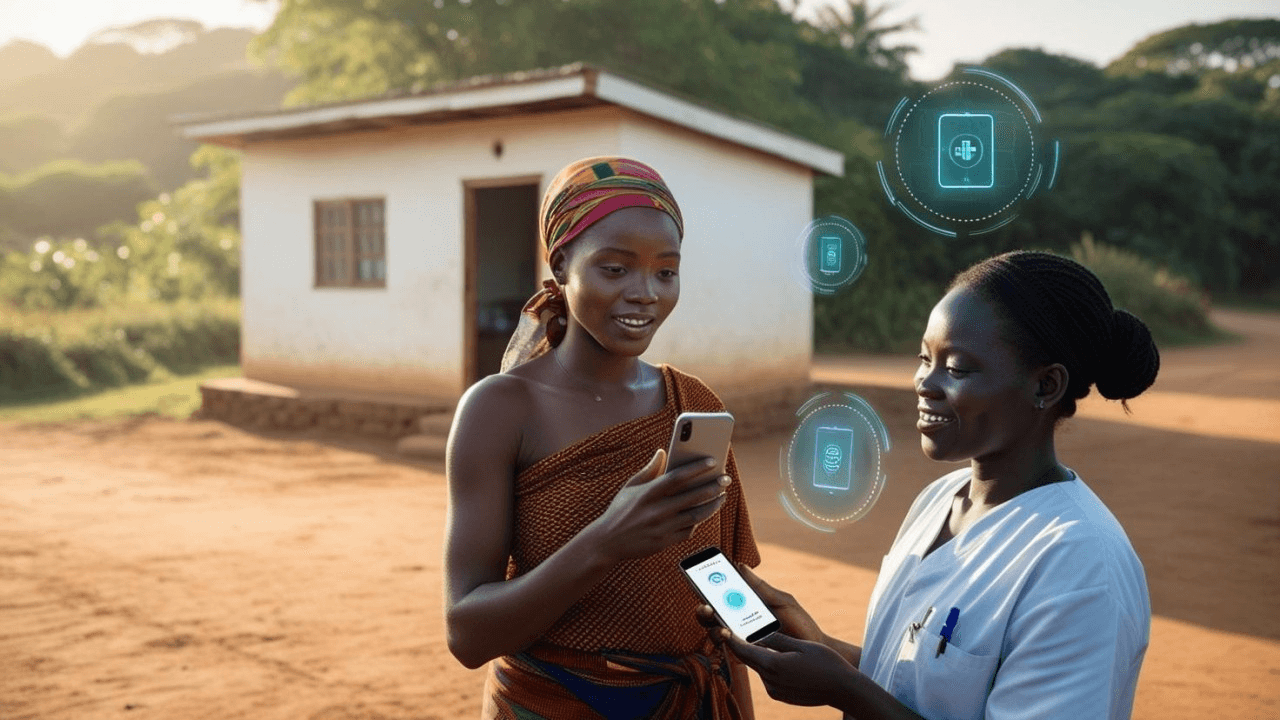
Can AI Fix Africa's Healthcare Infrastructure Crisis?
The issue of inadequate and poor healthcare infrastructure in Africa is one that cannot be overstated. Across the continent, access to quality care is deeply uneven, healthcare systems are underfunded, and millions of lives are at risk every day. This is not just about the lack of buildings or hospital beds, it is about systems that are failing to deliver the most basic care at the right time. A 2019 study published in the International Journal of General Medicine identified inadequate human resources (34.29%), insufficient budgetary allocation to health (30%), and poor leadership and management (8.45%) as the most critical challenges facing healthcare systems in Africa.
In countries like Nigeria, the effect of this broken system is seen in the sheer number of citizens who are forced to travel abroad for medical attention. Over five hundred Nigerians leave the country every month to seek care in other nations, costing the country about $1.2 billion annually in medical tourism alone. It becomes even more painful when you consider that most of these treatments are for conditions that could have been prevented or managed with early intervention if the right systems were in place. Added to this are the frequent industrial actions by medical professionals, weak health insurance frameworks, and the burden of out-of-pocket payments — all of which paint a picture of a sector under intense strain.
Can Artificial Intelligence Help Solve This Long-standing Problem?
While writing this section, I thought to myself — Isn't the adoption of AI a huge financial investment on its own? Yes, but it's also a strategic one. Unlike traditional infrastructure projects that may take years and billions to deploy, many AI tools can be deployed faster, at a fraction of the cost, and with measurable impact. A well-trained chatbot might cost less than a single outpatient ward but serve thousands more in preventive care. When we think about long-term ROI, AI isn't competing with brick-and-mortar — it's complementing and extending it in smarter ways.
Although AI is certainly dependent on infrastructure systems such as stable internet connectivity, reliable electricity, and access to clean data, it's still worth exploring how it can be applied in solving the deep-rooted challenge of inadequate healthcare infrastructure in Africa. Artificial Intelligence offers a shift in approach — from reactive healthcare to preventive, from centralised to distributed, from people-intensive to system-assisted. If properly implemented, AI can fill key gaps in care delivery, support medical professionals, and help us create systems that work even when physical infrastructure lags.
AI in Preventive Care and Early Intervention
One of the most compelling use cases of AI in Africa is in preventive healthcare. Our current system is reactive — people wait until they are sick before they seek care, often at a point where conditions have worsened. In Nigeria, where the doctor-to-patient ratio stands at 1:5000, far worse than the WHO's recommended 1:600, this model is not sustainable.
AI tools, such as mobile-based symptom checkers and chatbots, can provide guidance, triage symptoms, and offer early warnings to help people take action before problems escalate. These tools do not replace doctors. They empower people to make informed decisions and reduce the overwhelming pressure on healthcare workers and physical infrastructure.
One notable example is Ubenwa, a Nigerian-Canadian startup that has built an AI system capable of analysing a newborn's cry to detect signs of birth asphyxia, a leading cause of neonatal death. In settings where skilled birth attendants and diagnostic tools are limited, such an innovation provides a vital early-warning system that could save thousands of lives. This is exactly what it means to use AI as a bridge — not to replace doctors, but to empower frontline workers and parents with tools that compensate for what infrastructure alone cannot deliver.
There is also AwaDoc, a platform developed by Nigerian physician and health advocate Dr. Chinonso Egemba (popularly known as Aproko Doctor). AwaDoc is not positioned as a telemedicine service. Instead, it is an AI-powered chatbot built directly on WhatsApp, a platform already used by millions of Nigerians. The goal is to offer instant, accessible guidance on symptoms and next steps to people who may otherwise resort to self-diagnosis or self-medication. This innovation shows how AI can be embedded into tools people already use, making preventive healthcare more accessible without waiting for massive structural upgrades.
Predictive Maintenance and Smarter Infrastructure Management
Another overlooked challenge in African healthcare is the failure to maintain existing infrastructure. It's not uncommon to find life-saving machines lying unused simply because of a minor fault or missing part. Blood banks go bad because of unnoticed power outages. These are issues that AI could help prevent.
Through predictive maintenance, AI can track machine usage, detect wear and tear, and provide alerts before equipment breaks down. If hospitals had digital logs of equipment status that fed into a centralised system, they could act proactively rather than reactively. This would not only save lives but also reduce unnecessary spending on replacements and repairs. Think of it like having a system that monitors your lab machines and flags: "X-ray machine in Bay 3 has 60% usage fatigue, maintenance required within 10 days."
In Rwanda, the Babyl platform — an AI-powered primary care service — collaborates with local health centres to improve diagnostics and tracking. Though not equipment-focused, it demonstrates how consistent data collection can build proactive systems over time. To make this possible, hospitals need to move from paper records to digital systems. Once that's in place, even low-code AI tools or language models can be trained to assist staff in making informed maintenance decisions and scheduling.
Streamlining Administrative Workflows
Healthcare professionals across Africa are overburdened. Many of them spend hours on paperwork, filling out reports, organising files, handling logistics — leaving less time for patient care. AI can relieve some of that burden. From automating appointment scheduling to managing patient follow-ups and digitising records, AI systems can streamline administrative processes. These solutions don't require ultra-complex infrastructure; even low-code and no-code AI tools can be customised to help hospitals operate more efficiently.
In Ghana and Rwanda, Zipline is combining AI-powered logistics with drone technology to deliver blood and medical supplies to rural areas in record time. This shows that innovation doesn't have to wait for perfect roads or fully equipped hospitals. When AI is combined with the right logistics, it can help us leapfrog those gaps.
China recently launched its first AI-powered hospital at Tsinghua University, reportedly capable of serving over 10,000 patients in a day. Read more here. It shows that AI can serve as the backbone of a full-service healthcare environment. What if we could scale down that model, adapt it to our realities, and implement localised versions of AI hospitals in underserved areas?
Barriers to Adoption We Must Confront
Despite the promise, AI adoption in Africa's health sector is still stifled by major limitations. One of the biggest hurdles is internet connectivity — many parts of Africa still lack stable broadband access, which makes real-time AI tools difficult to deploy. The problem of power supply remains a persistent barrier; frequent blackouts and a lack of backup systems mean that even the most advanced AI solutions can be rendered useless without electricity.
Another issue is the state of health data. Most hospitals still rely on paper records. Without digitised and structured data, there is nothing for AI models to learn from or build on. We cannot talk about AI transformation without first laying the foundation of basic data systems. Furthermore, there is a shortage of local talent in the AI space. Many of the tools being developed come from outside the continent, which means they are not always tailored to our unique challenges. To make real progress, we need to invest in training local engineers, data scientists, and health professionals who understand both the science and the setting.
Then there is the question of policy. Many African countries are only just beginning to develop national strategies around artificial intelligence. Without clear guidelines and regulations, there's a risk that AI could be misused or that innovations could stall in the face of bureaucratic uncertainty. And of course, there's the issue of funding — AI infrastructure does not come cheap. Even if the tools themselves are relatively low-cost, building the digital infrastructure and training the personnel to run them requires investment, something that is often in short supply in public health systems.
The adoption of artificial intelligence in healthcare must be intentionally approached. It will not fix all the problems in our health systems overnight. But it does offer us a new way of thinking — a chance to reimagine how care is delivered, scaled, and sustained. Healthcare stakeholders must shift from manual and reactive systems to building smarter, faster, and more responsive systems that meet people where they are, not just where the hospitals are.
So, can artificial intelligence help solve Africa's long-standing healthcare infrastructure problem? The answer is a conditional but powerful yes. AI won't replace the need for hospitals, skilled health workers, or consistent policy reform. But what it can do — and is already doing — is bridge critical gaps in diagnosis, access, and decision-making where infrastructure falls short. It offers us a smarter, faster, and potentially more scalable way to deliver care.